The Definition of the Privacy Act
- What is Defined as "Personal Information"?
- The Common Principles Behind Privacy Acts Around the World
- How “The Privacy Act” Differs By Country
- Canada: Privacy Act (Government) and PIPEDA (Private Sector)
- Australia: Privacy Act 1988 and Australian Privacy Principles (APPs)
- United Kingdom: Data Protection Act 2018 and UK GDPR
- New Zealand: Privacy Act 2020 + 13 Privacy Principles
- How Organizations Can Comply With Global Privacy Acts
- Conclusion
Would you like to learn more?
Download our Pentest Sourcing Guide to learn everything you need to know to successfully plan, scope, and execute your penetration testing projects.
Privacy laws are used to help people and organizations through enabling better services and safer systems, but they can also be exploited (through identity theft, financial fraud, surveillance, and discrimination).
A “Privacy Act” is typically the foundation of a country’s privacy framework by setting rules for how organizations collect, use, store, share, and protect personal information, and defining individuals’ rights over their data.
In practice, privacy laws influence what customers will share with you, what regulators will tolerate, what insurers expect to see, and how expensive a security incident becomes when personal data is involved.
What is Defined as "Personal Information"?
Most privacy acts regulate “personal information” (or “personal data”): information about an identifiable individual. That can include obvious fields like name, address, and government ID numbers, but also “digital identity” signals such as device identifiers, location data, online account information, and sometimes behavioral data.
Many frameworks also treat certain categories as sensitive—like health data, biometrics, financial data, or information about children—requiring stronger safeguards and stricter conditions for processing.
The Common Principles Behind Privacy Acts Around the World
Across countries, privacy requirements tend to follow a familiar set of principles:
Purpose and necessity: collect only what you need for legitimate, stated purposes.
Consent and transparency: tell people what you’re doing and why; get consent when required.
Use limitation: don’t reuse data for unrelated purposes without a lawful basis.
Security safeguards: protect information with appropriate technical and organizational controls.
Retention limits: keep data only as long as needed; dispose of it securely.
Individual rights: allow people to access and correct their information (and sometimes request deletion or restriction).
Accountability: organizations are responsible for compliance and must be able to demonstrate it.
Canada’s private-sector law PIPEDA, for example, is built on widely recognized “fair information principles” such as accountability, consent, limiting collection, safeguards, openness, and individual access.
How “The Privacy Act” Differs By Country
Privacy acts vary from country to country. Below are just some examples of commonly enacted privacy acts:
Canada: Privacy Act (Government) and PIPEDA (Private Sector)
In Canada, the term “Privacy Act” most commonly refers to the federal law governing how the federal government handles personal information.
For private-sector organizations in commercial activities, the main federal privacy law is PIPEDA, which sets the rules for how businesses collect, use, and disclose personal information.
Australia: Privacy Act 1988 and Australian Privacy Principles (APPs)
Australia’s privacy framework is anchored in the Privacy Act 1988, and the Australian Privacy Principles (APPs) serve as the core operational rules for entities covered by the Act.
The APPs cover the full lifecycle of personal information: governance, collection, use and disclosure, direct marketing, cross-border disclosure, data quality, security, access, and correction.
United Kingdom: Data Protection Act 2018 and UK GDPR
In the UK, privacy obligations are primarily implemented through the Data Protection Act 2018 and the UK GDPR framework. Government guidance summarizes that UK data protection legislation controls how personal information is used by organizations, including businesses and government departments.
In other words, the UK’s “privacy act equivalent” is a combined regime: the DPA 2018 plus the UK GDPR rules it sits alongside.
New Zealand: Privacy Act 2020 + 13 Privacy Principles
Lastly, New Zealand’s Privacy Act 2020 sets out privacy rights and obligations through 13 Information Privacy Principles, which govern how agencies collect, store, use, and share personal information.
How Organizations Can Comply With Global Privacy Acts
Map your data and minimize it: You can’t protect what you can’t see. Inventory where personal information lives (systems, SaaS tools, endpoints, cloud storage), map data flows, and reduce collection to what’s necessary.
Build privacy into onboarding, vendor management, and product delivery: Privacy obligations frequently extend to third parties. Contractually require vendor security controls (encryption, logging, breach notification timelines), and assess exposed integrations.
Apply strong security safeguards (privacy depends on security): Privacy laws consistently require “reasonable” safeguards. Practically, that means least-privilege access controls and MFA; encryption in transit/at rest; secure configuration of cloud and SaaS; and the monitoring, logging, and incident response readiness
Many frameworks empower regulators to investigate, and individuals to complain. Being able to demonstrate your governance (namely policies, training, access controls, retention rules, and incident handling) reduces regulatory and reputational fallout when something goes wrong.
Conclusion
Privacy Acts are not just legal checklists. They formalize a trade: organizations gain the ability to use personal information, and in return must handle it transparently, minimally, securely, and accountably. Companies that treat privacy as a core operating principle—supported by real security controls—reduce breach impact, improve customer trust, and build resilience in a world where data handling is scrutinized more than ever.
Contact Us
Speak with an Account Executive
Interested in Pentesting?
Penetration Testing Methodology
Our Penetration Security Testing methodology is derived from the SANS Pentest Methodology, the MITRE ATT&CK framework, and the NIST SP800-115 to uncover security gaps.
Download Methodology
Pentest Sourcing Guide
Download our Pentest Sourcing Guide to learn everything you need to know to successfully plan, scope, and execute your penetration testing projects.
Download GuideExplore in-depth resources from our ethical hackers to assist you and your team’s cyber-related decisions.
September 13 - Blog
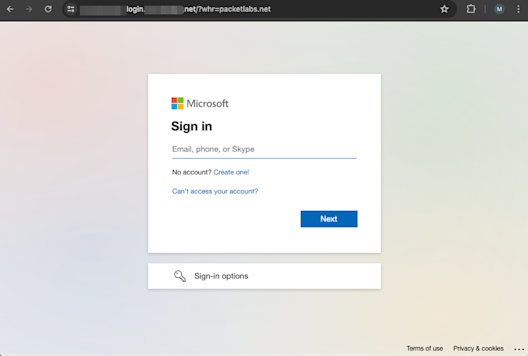
Why Multi-Factor Authentication is Not Enough
Knowing is half the battle, and the use and abuse of common frameworks shed insight into what defenders need to do to build defense in depth.

November 19 - Blog
The Top Cybersecurity Statistics for 2024
The top cybersecurity statistics for 2024 can help inform your organization's security strategies for 2025 and beyond. Learn more today.

October 24 - Blog
Packetlabs at SecTor 2024
Packetlabs is thrilled to have been a part of SecTor 2024. Learn more about our top takeaway's from this year's Black Hat event.