Historical Christmas Cyberattacks: The Pattern Continues
Would you like to learn more?
Download our Pentest Sourcing Guide to learn everything you need to know to successfully plan, scope, and execute your penetration testing projects.
For decades, cybersecurity professionals have noticed a pattern that’s difficult to ignore: major cyberattacks frequently occur during the Christmas and year-end holiday period. While the motivations and techniques have evolved, the underlying logic has remained the same: that holidays create ideal conditions for threat actors.
Reduced staffing, distracted users, delayed response times, and increased reliance on remote access all combine to lower the cost of attack and increase the chance of success. Over time, adversaries (ranging from criminal ransomware groups to nation-state operators) have learned to exploit this window with precision.
Why Christmas Became a Window for Cyberattacks
The appeal of holiday attacks predates modern ransomware. Even in early cybercrime, attackers understood a basic truth: incidents escalate faster when defenders are slow to respond.
IT and security teams operate with reduced coverage
Change freezes limit remediation options
Executives and decision-makers are often unavailable
Users access corporate systems from unfamiliar locations
These conditions are not accidental; they’re predictable. And predictability is something that threat actors value more than technical sophistication.
Early Holiday Attacks: Disruption and Experimentation
In the early 2000s, Christmas-period cyber incidents were often opportunistic rather than strategic. Worms and viruses like Mydoom and Sasser spread rapidly during holiday downtime, exploiting unpatched systems while administrators were away.
While these attacks lacked the targeted precision seen today, they established a key lesson: holiday latency magnifies impact. Systems remained infected longer, cleanup took more time, and operational damage increased.
The Rise of Financially Motivated Holiday Attacks
By the 2010s, ransomware groups began planning attacks around staffing cycles, explicitly timing campaigns for weekends and holidays.
One of the earliest high-profile examples was Target’s 2013 breach, which occurred during the Black Friday shopping season.
Although not strictly a "Christmas cyberattack", it demonstrated how attackers leveraged peak operational stress and limited response windows to exfiltrate massive volumes of data.
2020–2021: When Holiday Attacks Go Strategic
The COVID era accelerated both digital transformation and attacker sophistication. Remote access expanded dramatically, while security teams struggled with burnout and coverage gaps.
In December 2020, the SolarWinds supply chain compromise was publicly disclosed just before Christmas. Although the intrusion occurred months earlier, the timing of its discovery and response underscored how complex incidents can stall during holiday periods... particularly when they involve multiple organizations and government agencies.
In May 2021, Colonial Pipeline was hit over Mother’s Day weekend, causing fuel shortages across the U.S. East Coast. Weeks later, JBS, the world’s largest meat processor, suffered a ransomware attack over Memorial Day weekend. While not Christmas attacks, both reinforced the same principle: attack during downtime, force rapid executive decisions, maximize leverage.
These incidents normalized the idea that attackers would deliberately strike when defenders were least prepared.
Christmas as a Ransomware Pressure Point
By the early 2020s, ransomware operators had refined their holiday playbook:
Initial access was achieved weeks or months earlier
Payloads deployed during holidays
Encryption timed for maximum operational disruption
Ransom demands calibrated for executive urgency
Christmas became especially valuable because it combined low staffing with high emotional pressure. Organizations faced the prospect of disrupted services, ruined holiday operations, and reputational damage.
Several ransomware groups openly discussed this strategy in leaked chats and forums, referring to holidays as “quiet hours” or “long nights.”
Recent Examples of Christmas Cyberattacks
In December 2023, multiple ransomware campaigns targeted healthcare and retail organizations during the holiday season, exploiting VPN access and identity weaknesses.
In November 2024, Blue Yonder, a major supply chain software provider, suffered a ransomware attack just before Thanksgiving, impacting customers including Starbucks and large grocery chains. While not Christmas itself, the timing again exploited holiday staffing reductions and operational dependency.
Industry data reinforces what practitioners already know. Reports consistently showcase that:
A majority of ransomware attacks occur during nights, weekends, or holidays
Response times are significantly longer during these periods
Organizations without contingency coverage are far more likely to suffer prolonged impact
Conclusion
Despite increased awareness, holiday attacks remain effective because they don’t rely on zero-days or advanced exploits. They rely on human and operational realities such as:
Misconfigured access lingering unnoticed
Alerts that don’t escalate quickly
Delayed containment decisions
Assumptions that “nothing will happen over the holidays”
The history of Christmas cyberattacks tells a consistent story: attackers optimize for defender weakness, not technical elegance. As long as organizations reduce coverage, delay decisions, and rely on goodwill instead of preparation, the holidays will remain prime time for compromise.
Contact Us
Speak with an Account Executive
Interested in Pentesting?
Penetration Testing Methodology
Our Penetration Security Testing methodology is derived from the SANS Pentest Methodology, the MITRE ATT&CK framework, and the NIST SP800-115 to uncover security gaps.
Download Methodology
Pentest Sourcing Guide
Download our Pentest Sourcing Guide to learn everything you need to know to successfully plan, scope, and execute your penetration testing projects.
Download GuideExplore in-depth resources from our ethical hackers to assist you and your team’s cyber-related decisions.
September 13 - Blog
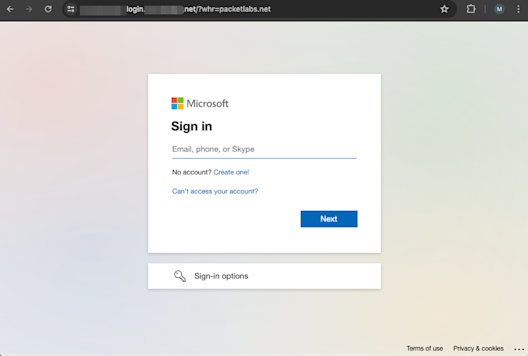
Why Multi-Factor Authentication is Not Enough
Knowing is half the battle, and the use and abuse of common frameworks shed insight into what defenders need to do to build defense in depth.

November 19 - Blog
The Top Cybersecurity Statistics for 2024
The top cybersecurity statistics for 2024 can help inform your organization's security strategies for 2025 and beyond. Learn more today.

October 24 - Blog
Packetlabs at SecTor 2024
Packetlabs is thrilled to have been a part of SecTor 2024. Learn more about our top takeaway's from this year's Black Hat event.